This is the shortest assessment we have published. The argument does not need much room.
A whitening powder is an abrasive. It works by removing material from the outside of the tooth. There is no second mechanism, no bleaching stage, and nothing that reaches the pigment sitting inside the enamel and dentin.
Everything else follows from that one fact. Including why it stops working.
Why two minutes cannot do it
It comes down to one thing: how long the active actually sits on your teeth. Brushing gives it about two minutes, watered down by saliva the whole time, and then you spit it out. A tray holds the gel against your enamel for thirty minutes, undiluted, with a light speeding it up.
That gap happens every single session. Brushing for another month does not close it, which is exactly why the jar asks you to wait four to six weeks before deciding it did not work.
And it is still a powder
A powder has to carry its active on something, and that something is an abrasive particle. Most manufacturers never publish an abrasivity figure, so you are buying an unknown. Where testing has been published, on the charcoal variants, Relative Dentin Abrasivity runs 200 to 250 against an ADA ceiling of 250 and an FDA recommended limit of 200.
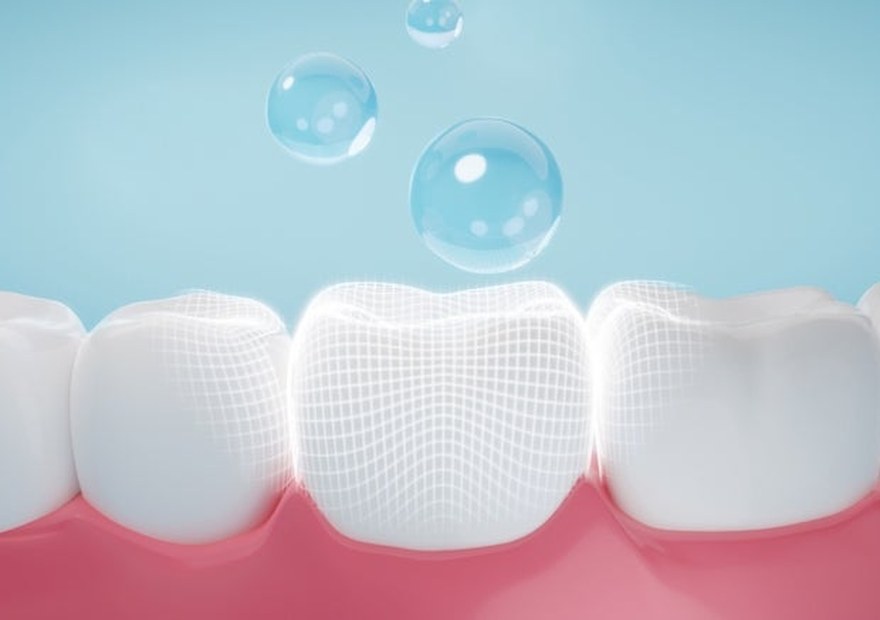
Enamel has no living cells. It does not repair, thicken or come back, and the dentin underneath it is naturally yellow.
Already convinced? This is what we point people at.
See The Aura Glow LED KitThirty minutes a session. 60 day money-back guarantee.Enamel has no living cells. It does not repair, thicken or return. What comes off at thirty is not there at sixty, and under it sits dentin, which is naturally yellow. Thin the enamel and you reveal more of the yellow layer, which is the opposite of what was advertised.
What the label will not tell you
"Peroxide-free" sounds like a safety feature. It is a positioning decision.
Peroxide is what your dentist uses to change the colour of a tooth, and it is the chemistry with the most research behind it. Leave it out and you have taken away the part that does the work, then sold the absence back to you as a benefit.
We are not aware of a whitening powder that carries the ADA Seal of Acceptance. It is voluntary, so that is not proof of harm. It is just worth knowing before you spend.
It is slow, and it is sold as fast
There is no reaction to wait for, so there is nothing that happens quickly. The instructions ask for twice a day for four to six weeks, which conveniently outlasts most return windows.
An LED-accelerated gel is the opposite trade. One thirty-minute session, and the manufacturer states the change is visible after the first use.
The result rents. The damage buys.
The brightness is surface film removal, and film comes back with the next coffee. The enamel loss does not come back at all. Those two clocks run in opposite directions for as long as you keep using it.
Long enough, it reverses the result you paid for
Dentin is yellow and enamel is what hides it. Thinner enamel shows more dentin. People describe this as the powder "not working any more". In our view it is working exactly as designed, on the wrong material.
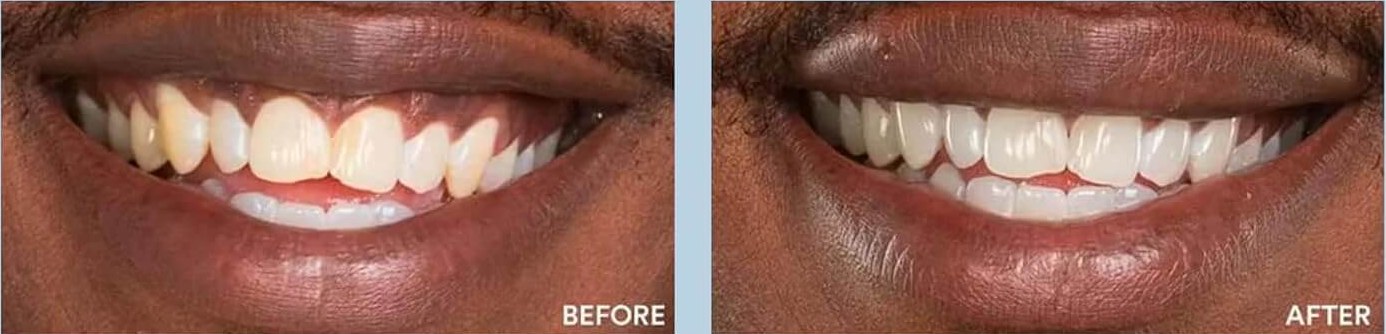
Almost nobody goes looking for whitening powder. It turns up in a feed, in a fifteen second video, with a dramatic before and after and a discount. That is worth a moment of scepticism, but it is not the real problem. The real problem is what the product can physically do, and that is settled before any of the advertising starts.
Everything else you can buy, and where each one stops
There are really only four ways to lighten teeth, and they are nowhere near equivalent. The difference comes down to the same two things every time: what the active is, and how long it stays where you put it.
-
Powder
Two minutes of brushing. No containment, no light.
An abrasive on a brush, watered down by saliva and then spat out. It polishes the surface and never reaches the pigment inside the tooth, which is why the shade always drifts back.
-
Strips
The right chemistry in the wrong delivery.
Strips do carry peroxide, which puts them ahead of powder straight away. The trouble is fit. A flat strip on a curved arch slides, leaves gaps along the gum line and misses the sides of the teeth, so you end up with a patchy result and two bright front teeth.
-
Pens
The shortest contact time of anything sold.
You paint the gel on and your saliva starts washing it off immediately. Nothing holds it against the tooth, so most of the dose is gone before it has done anything.
-
The dentist's chair
The best result, at roughly $300 to $1,000 a visit.
A strong gel, held in place, accelerated with a lamp, under supervision. It genuinely works. It also costs the most and usually wants a touch up inside the year.
A tray and a light is the chair's method, shrunk to fit your bathroom.
The gel is held against every tooth instead of painted on and hoped over. The tray keeps saliva off it for the full thirty minutes. The light drives the reaction the same way the lamp in the surgery does.
That is the whole reason it works when the jar did not, and it is why we keep coming back to the same recommendation.
Institute Assessment
Avoid. The mechanism cannot produce the advertised result.
We found no basis on which abrasive powder is a sensible way to lighten teeth, and several on which it is a poor one. The category has also not produced a single product accepted under the ADA Seal programme.
If the goal is a visibly lighter shade, the chemistry that achieves it is peroxide, and the at-home form of it is a gel with an LED light.
A light, a gel, and thirty minutes

The whitening your dentist does has never involved scrubbing. It is a peroxide gel, held against the tooth for a set number of minutes, breaking down the pigment inside it. The at-home version is the same chemistry with an LED light over it.
Which means thirty minutes, once, while you answer messages or watch something. No jar on the side of the sink. No powder on the counter. No six-week commitment you will quietly abandon in week two.
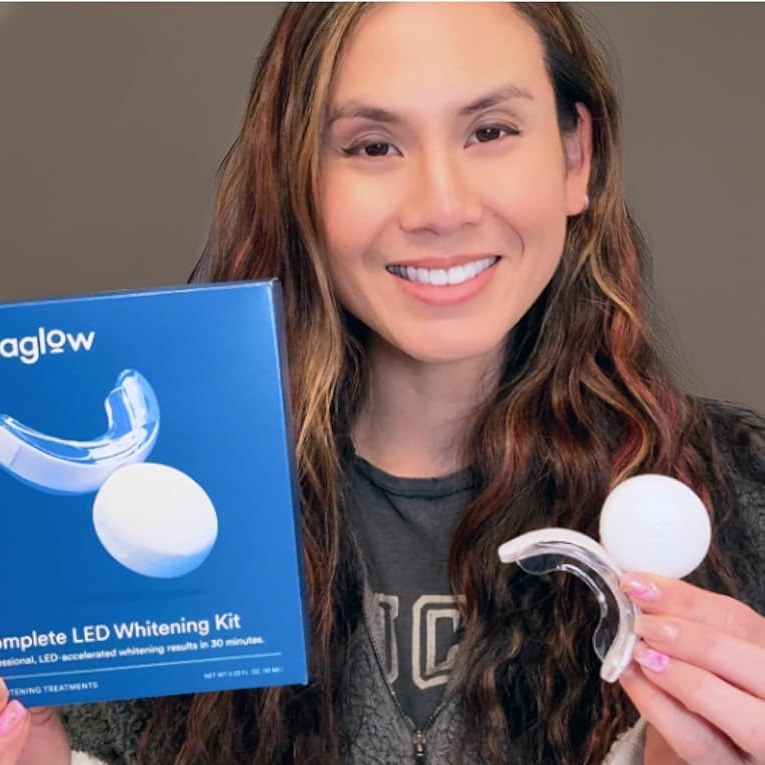
Powder asks for six weeks of your mornings. This asks for thirty minutes.
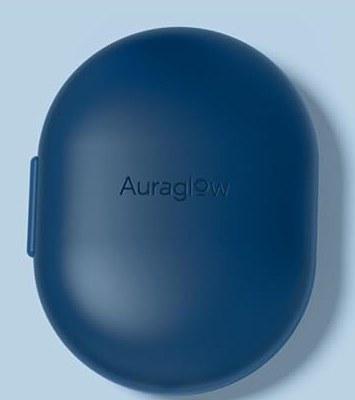
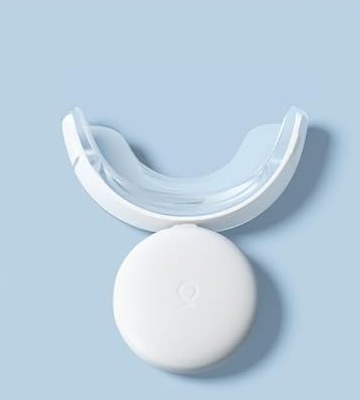
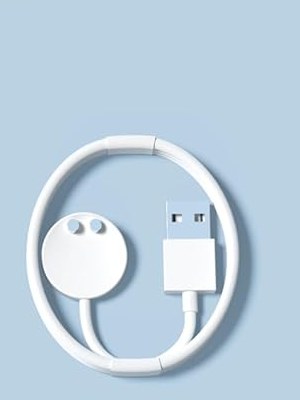
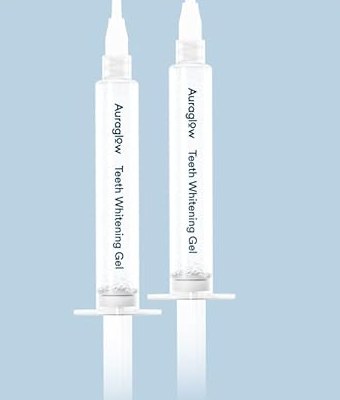
The light recharges over USB, so there are no batteries to buy. A USB wall plug is not included and any phone plug works. The manufacturer states LED-accelerated results in 30 minutes and a brighter smile after the first use. Results vary.
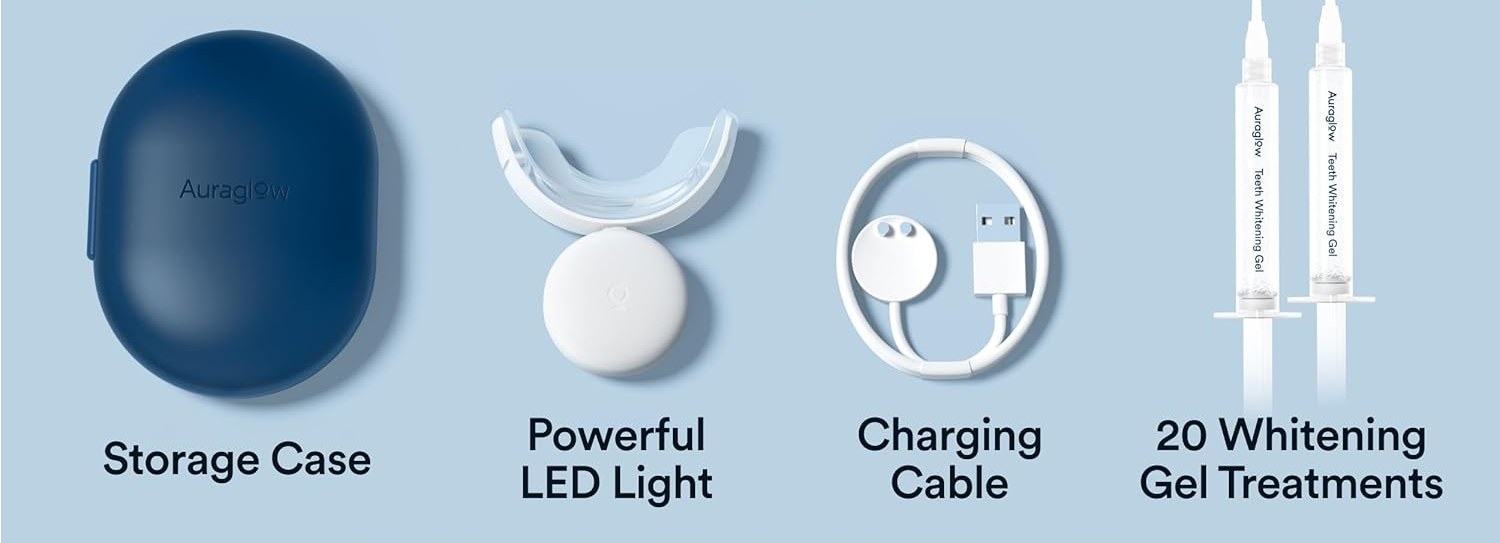
See the Aura Glow LED whitening kit
Check AvailabilityManufacturer's 60 day money-back guaranteeLook the brand up somewhere it does not control
Not the reviews on its own website. Those are chosen.
Several of the most heavily advertised whitening powders sit below two stars out of five on independent review platforms, across hundreds of reviews. The average is not the interesting part. The repetition is.
-
A guarantee that turns out not to apply
Buyers describe asking for the advertised refund inside the window and being told their order fell in a promotional or flash sale period that was excluded. The guarantee made the sale. The exclusion kept the money.
-
Things on the order nobody remembers choosing
Extra items and extra charges, spotted on the statement afterwards rather than at the checkout.
-
Support that simply stops replying
Emails unanswered for weeks, numbers that do not connect, refunds that never arrive.
One more thing worth noticing while you are there. A brand can show a wall of five-star reviews and still carry a low overall score, because these platforms weight recent reviews and discount ones they flag as solicited. When the rating and the reviews disagree that sharply, the rating is usually the honest half.
We ran the same check on what we recommend
Aura Glow holds 3.7 out of 5 across 153 reviews, with 87 percent of them at five stars. More usefully, the company replies to every negative review and settles them through its guarantee rather than arguing about promotional periods.
Its complaints are worth knowing too, because they are real. Two come up repeatedly: sensitivity during a treatment, and occasionally a light that stops holding its charge. Sensitivity is the known trade with peroxide. It is why we say to space your sessions out rather than push through them, and why a guarantee that is actually honoured matters.
Check us the same way. We would genuinely rather you did.
Sources
- Zoller et al., "Relative dentin and enamel abrasivity of charcoal toothpastes", International Journal of Dental Hygiene, 2023. Abrasivity figures cited here were measured on charcoal formulations.
- American Dental Association guidance on dentifrice abrasivity (RDA ceiling of 250) and the ADA Seal of Acceptance programme.
- US Food and Drug Administration recommended abrasivity limit of 200 RDA.
- Manufacturer product information published by Auraglow for the Complete LED Whitening Kit.
Aura Glow is sold direct by the manufacturer. We receive a commission on sales through our link.