Consumer Product Assessment
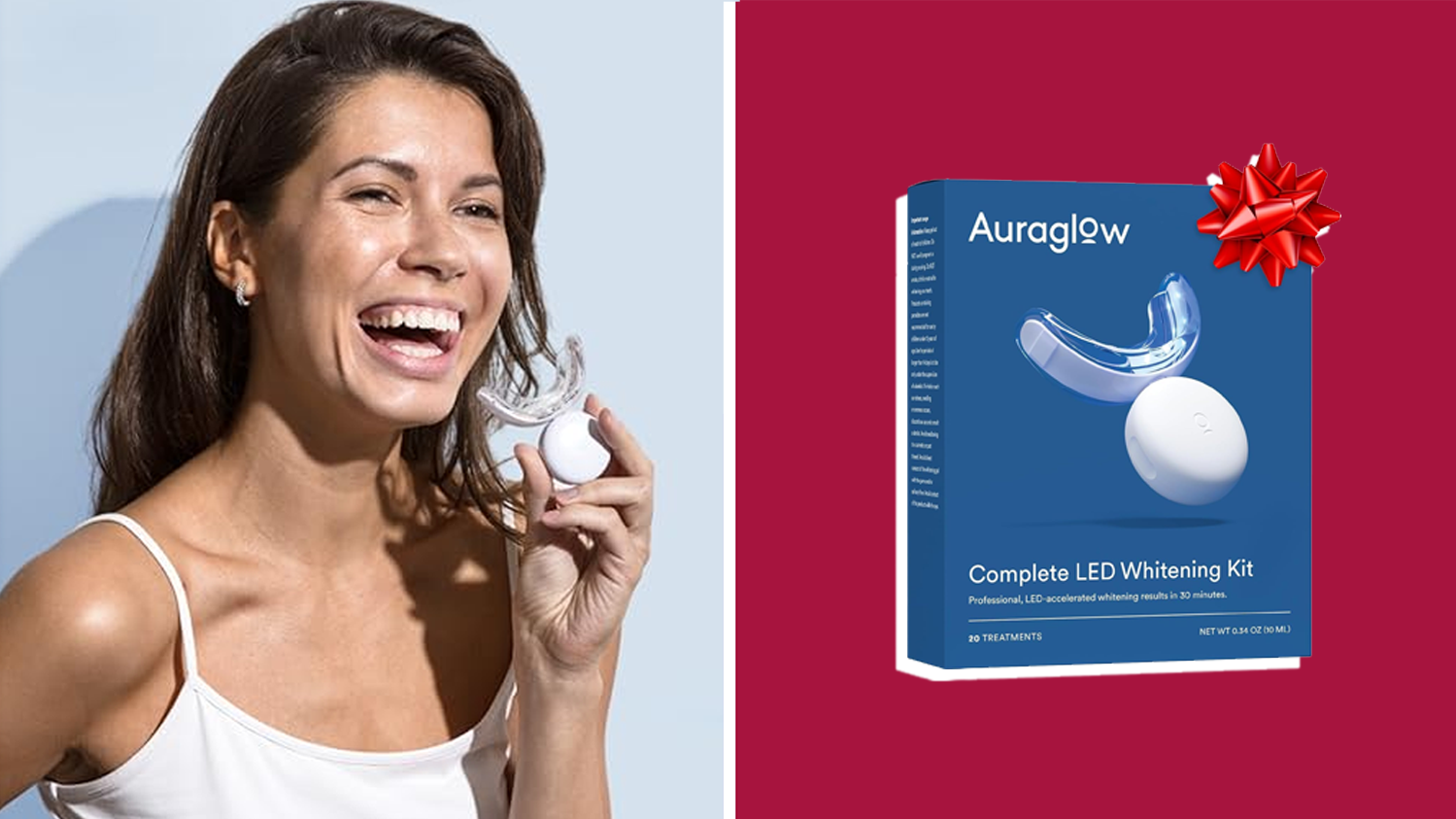
Four determinants decide whether an at-home whitening product changes the colour of a tooth rather than the appearance of its surface: the nature of the active agent, the contact time achieved, the cost per treatment, and the remedy available when a product fails. Most products marketed to consumers satisfy fewer than half of them.
This assessment applies those four determinants to the Auraglow Complete LED Whitening Kit. We find the system satisfies all four, with one qualification concerning transient sensitivity, and we recommend it over abrasive whitening powders for consumers seeking a change of tooth shade.
This assessment concerns a commercially available product. Supplier listing:
View The Assessed Product20 treatments · 60 day money-back guaranteeThis is a desk assessment. We did not conduct laboratory testing and we did not physically test the product. Our findings are drawn from manufacturer-published specifications, published abrasivity research, guidance issued by the American Dental Association and the US Food and Drug Administration, and publicly visible consumer review listings. All sources are enumerated at section 9.
Products in this category were assessed against four determinants, selected because each one independently prevents a whitening result when unmet:
| Determinant | Failure when unmet |
|---|---|
| Active agent | Product cleans the surface but cannot alter tooth colour |
| Contact time | Active is diluted or removed before it can react |
| Cost per treatment | Effective result exists but is not accessible |
| Remedy on failure | Consumer bears the loss when the product underperforms |
Ratings expressed in this document are the editorial judgement of the Consumer Assessment Unit. They are not measured scores and should not be read as such.
Tooth colour is altered by a peroxide compound diffusing through the enamel and breaking down the pigment molecules held beneath the surface. There is no second mechanism available to a consumer product. Abrasion, polishing and surface film removal do not alter tooth colour; they alter what sits on top of it.[3]
This distinction accounts for the majority of consumer dissatisfaction in the category. A product may function exactly as designed and still fail to produce the advertised outcome, because the mechanism it employs is not capable of producing that outcome.
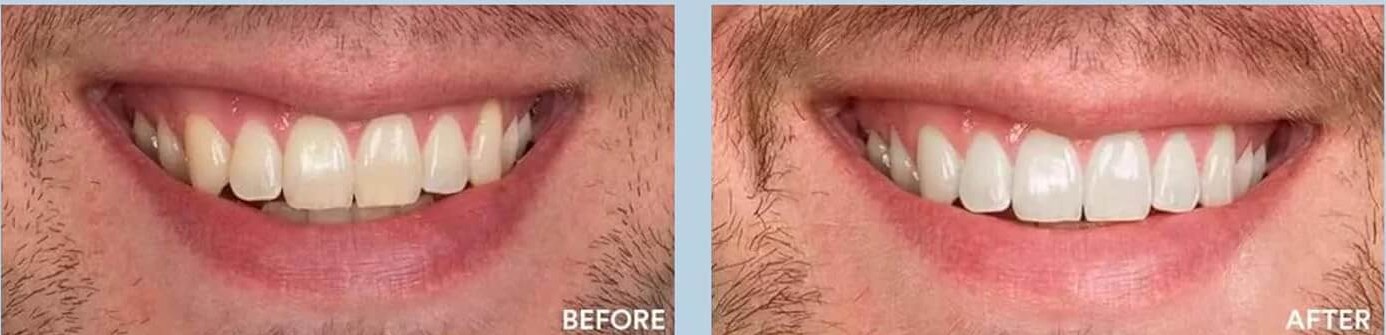
The assessed system employs a peroxide whitening gel. On determinant one it is satisfied.
Whitening is a function of concentration multiplied by duration of contact. This is the determinant on which most consumer formats fail, and it is rarely disclosed on packaging.
| Format | Delivery | Contact | Determinant |
|---|---|---|---|
| Whitening powder | Brushed, saliva-diluted | ~2 min | Not met |
| Whitening pen | Painted, uncontained | <2 min effective | Not met |
| Whitening strip | Adhesive, partial coverage | ~30 min, incomplete | Partial |
| Tray and LED system | Contained, full arch | 30 min undiluted | Met |
| In-office treatment | Contained, supervised | 60 to 90 min | Met |
Observation
Because contact time is a per-session property, extending a course of treatment does not compensate for a format that fails this determinant. A powder used for six weeks delivers the same two minutes of diluted contact on each occasion that it delivered on the first.
The assessed system contains the gel against the full arch for a stated thirty minutes, with LED acceleration. On determinant two it is satisfied.
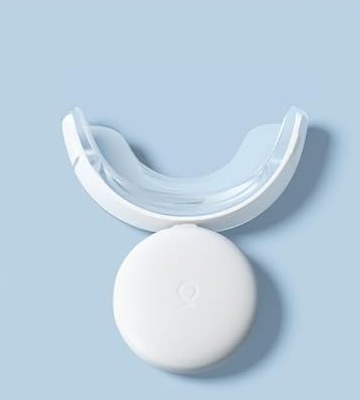
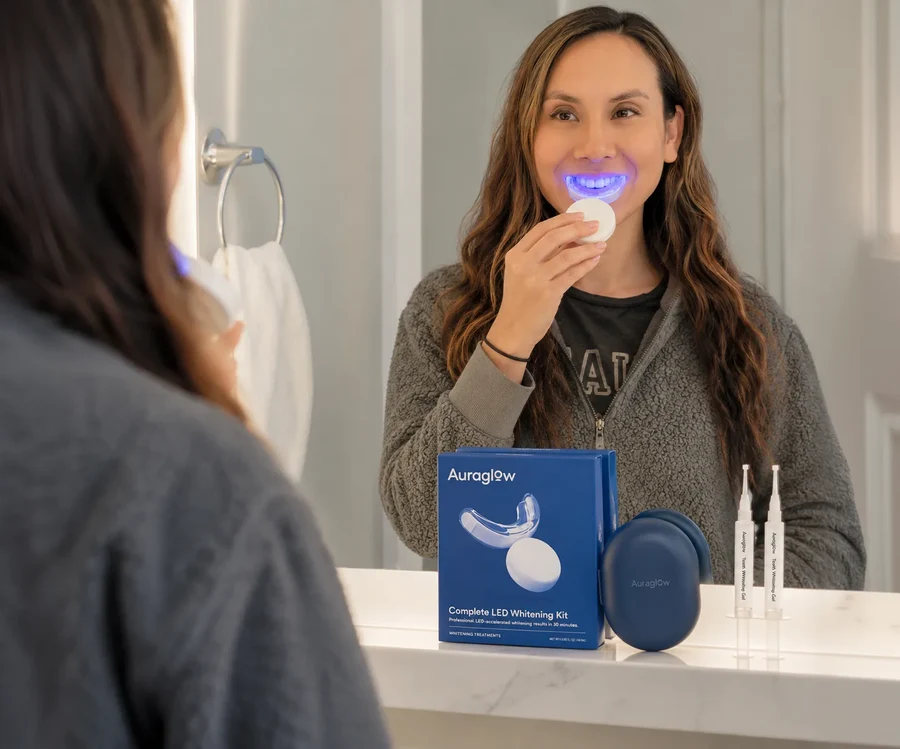
Supplier listing for the system assessed above:
View The Assessed ProductCurrent price and availabilityAn effective treatment that a consumer cannot access is not a solution. Professional in-office whitening satisfies determinants one and two comprehensively, and is reported at USD 300 to 1,000 per visit, with re-treatment commonly required within twelve months.[6]
| Option | Indicative cost | Outcome |
|---|---|---|
| In-office whitening, per visit | USD 300 to 1,000 | Shade change |
| Whitening strips, per box | USD 40 to 60 | Partial |
| Whitening powder, per jar | USD 30 to 50 | Surface only |
| Assessed system, 20 treatments | See supplier listing | Shade change |

Expenditure on products that fail determinant one is not a low-cost alternative to whitening. It is a recurring cost that does not terminate in the outcome sought, since surface film re-accumulates with normal dietary exposure.
On determinant three the assessed system is satisfied.
No whitening product performs identically for every consumer. The material question is who bears the cost when it does not.
The manufacturer of the assessed system publishes a 60 day money-back guarantee and states that return shipping is covered. Publicly visible review listings indicate the supplier responds to negative reviews and resolves them under that guarantee.[5]
This is not universal in the category. Recurring complaints recorded against heavily advertised whitening powder brands include refunds declined on the basis that a purchase fell within a promotional period excluded from the stated guarantee, charges for items consumers do not recall selecting, and unanswered support correspondence.[5]
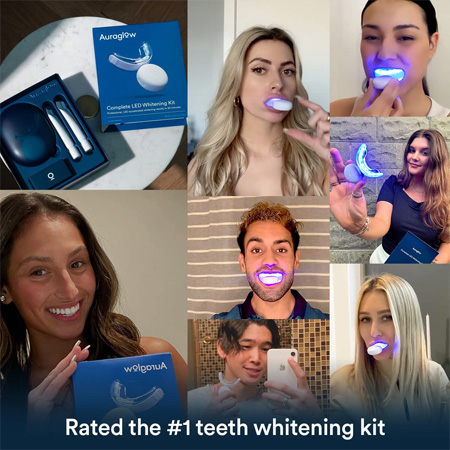
On determinant four the assessed system is satisfied.
Transient tooth sensitivity is the principal adverse effect reported for peroxide whitening products, including this one, and is the most frequent complaint in consumer review listings for the assessed system. A minority of reviewers additionally report charge retention failure in the LED unit.[5]
Qualification to the recommendation
Sensitivity is dose-dependent and reversible. It can be managed by increasing the interval between sessions or discontinuing use, and it resolves.
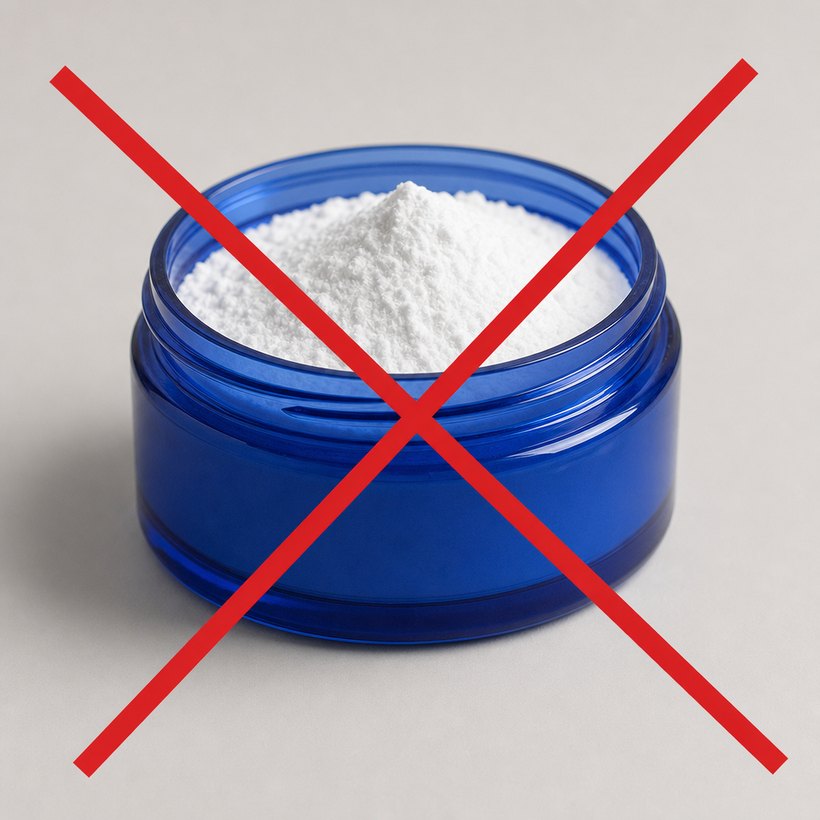
By contrast, the enamel loss produced by abrasive products is cumulative and permanent. Enamel contains no living cells and is not replaced.[1][2] Progressive thinning exposes a greater proportion of the underlying dentin, which is naturally yellow, so prolonged use of an abrasive can move tooth appearance in the opposite direction to the one intended.
These two risks are frequently presented as comparable. They are not. One is adjustable and temporary; the other is irreversible.
The recommendation at section 8 does not extend to the following:
| Consumer | Reason |
|---|---|
| Anterior crowns, veneers or composite restorations | No whitening agent alters ceramic or composite material |
| Untreated caries, periodontal disease or fractured tooth | Requires clinical attention before any cosmetic treatment |
| Pre-existing significant sensitivity | Peroxide may aggravate; seek clinical advice first |
| Under 18, pregnant or nursing | Unless advised otherwise by a dental professional |
The assessed system satisfies all four determinants, subject to the qualification at section 6.
Recommendation
The system employs the active agent and delivery method used in professional practice, achieves the contact time that determines whether that agent can act, and is accessible at a fraction of in-office cost. The stated 60 day guarantee transfers the risk of underperformance to the supplier rather than the consumer.
We do not recommend abrasive whitening powders for this purpose at any price, on the grounds set out at sections 2 and 6.
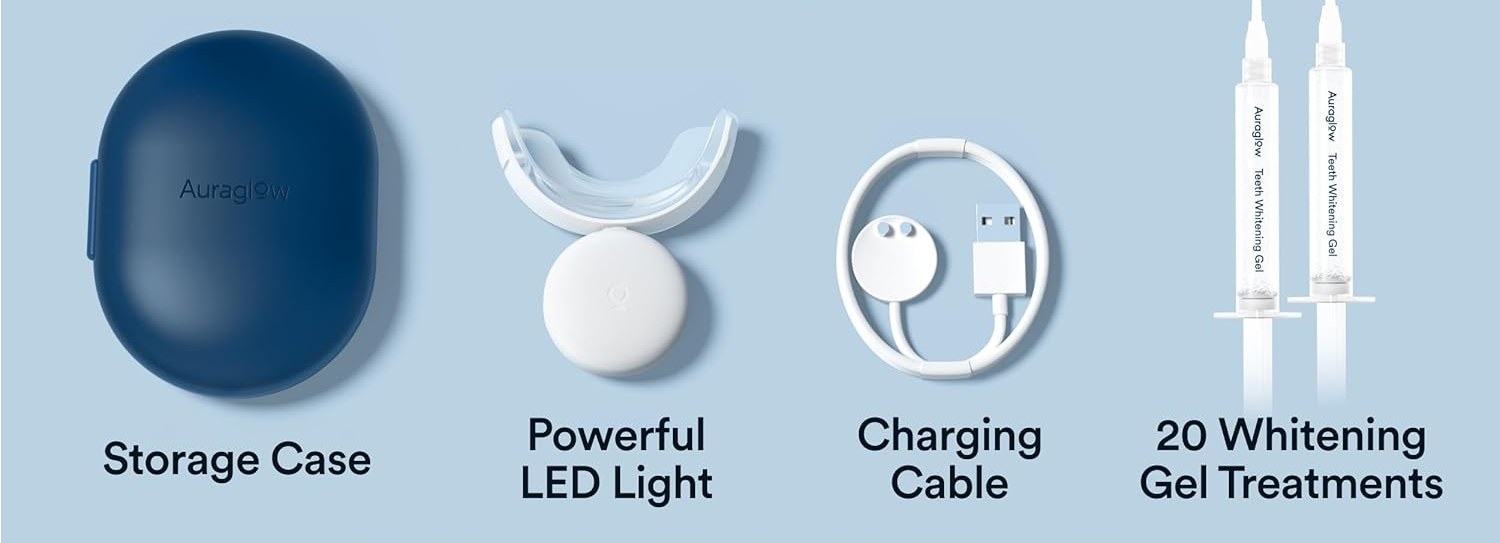
The product assessed in this report is available from the supplier below.
View The Assessed Product60 day money-back guarantee, return shipping stated as coveredThis document is an advertisement. The Teeth Research Institute is a publishing name used by Vault Media Inc., an independent affiliate marketer. It is not an accredited research body, laboratory, dental practice or professional association, and it is not affiliated with the American Dental Association, the US Food and Drug Administration or any regulator. Vault Media Inc. receives a commission when a reader purchases through the links in this document. That commercial relationship exists with the supplier of the product recommended at section 8 and should be weighed accordingly.
No laboratory testing was performed and no physical sample was tested. Determinant ratings are editorial judgement, not measured values. Abrasivity figures cited at section 6 were measured on charcoal formulations and are not necessarily representative of all powder products. Review-listing observations describe patterns recorded across the category and are not statements of fact concerning any individual company. Manufacturer claims, including session duration, treatment count, ratings and guarantee terms, are reproduced as published and were not independently verified. Ratings, review counts and cost ranges were accurate at the issue date and are subject to change.
Whitening products are cosmetic and are not intended to diagnose, treat, cure or prevent any disease. Nothing in this document constitutes dental advice. Consult a dental professional before commencing any new oral care regimen. The supplier, not the Institute, is responsible for orders, shipping, refunds, stock, pricing and any guarantee described.
Teeth Research Institute, Consumer Assessment Unit. A publishing name of Vault Media Inc. This site is not a part of the Google, Facebook, Instagram or TikTok websites or their parent companies, and is not endorsed by Google LLC, Meta Platforms, Inc. or ByteDance Ltd. in any way. All trademarks are the property of their respective owners.
Terms of Use | Privacy Policy | Advertising Disclosure | Contact Us
© Vault Media Inc. All rights reserved.