
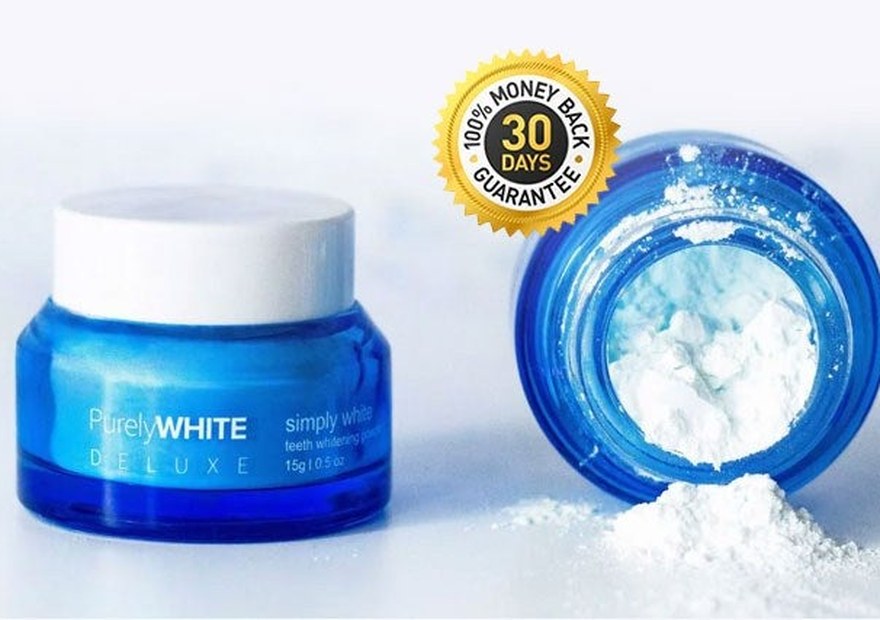
It costs pennies to make. It goes viral. It asks for six weeks before you are allowed to call it a failure. And it cannot whiten a tooth.
That combination is not an accident. It is the entire business model, and it only works because most people never learn the difference between cleaning a tooth and whitening one.
Point 1There is no bleaching happening. At all.
Whitening is a chemical reaction. A peroxide breaks down the pigment molecules sitting inside the enamel and dentin, and the tooth itself becomes lighter.
Abrasion is not that. Abrasion is scraping, and scraping only ever removes what is on the outside.
Powder is not a gentler way to whiten. It is not whitening.
Already convinced? This is what we point people at.
See The Aura Glow LED KitThirty minutes a session. 60 day money-back guarantee.This is why the instructions always tell you to give it four to six weeks. There is no reaction to wait for. There is only scrubbing, repeated, and once the surface film is gone the only thing left to work on is the tooth.
Point 2The abrasion numbers are public
Whitening is concentration multiplied by contact time. A powder gets two minutes of brushing, diluted by saliva the whole way, then goes down the sink. A tray holds gel on the enamel for thirty minutes, undiluted, with a light accelerating it.
Read that ordering again. The product sold as the natural, gentle alternative tests more abrasive than the whitening toothpaste it is marketed against.
Point 3Not one product in the category has the seal
The ADA Seal of Acceptance is voluntary. Plenty of fine products never apply. But the seal exists precisely so manufacturers can submit evidence and be evaluated.
We are not aware of a whitening powder of any colour that carries it. And most never publish an abrasivity figure either, so the particle you are brushing with is an unknown.
That is not proof of harm. It is an absence of evidence in a category built almost entirely on confident claims, and in our view that gap is the story.
Point 4The damage compounds and the result does not
Here are the two halves of the trade, running in opposite directions.
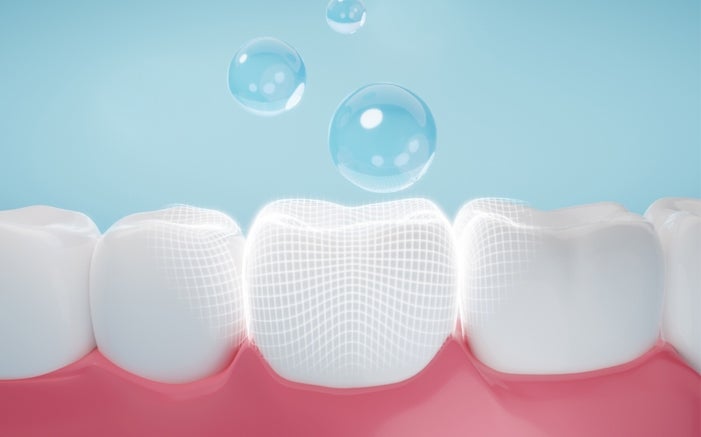
The brightness is temporary. Coffee, tea and wine put the film back within days, so the jar gets used again.
The enamel loss is permanent. It does not repair between uses, so every session adds to a total that never comes down.
You are renting the result and buying the damage.
Point 5Long enough, and it works against you
Under the enamel is dentin, and dentin is yellow. Enamel is the layer that hides it.
Thin the enamel and more of that yellow shows through. People describe this as the powder "not working any more." It is working. The colour arriving now is coming from underneath, and no amount of further scrubbing will fix something that scrubbing caused.
Two more things that rarely make the label. Many powders contain no fluoride, so anyone using one in place of toothpaste has swapped cavity protection for a cosmetic effect. And abrasive granules are reported lodging at the gum margin and around the edges of fillings and crowns, where they sit as an irritant.
What the chair actually uses
Professional whitening has never been abrasive. It is a peroxide gel, held against the tooth for a measured number of minutes, acting on pigment.
The at-home version of that is a tray and gel kit, and it is not expensive or exotic.
The kit we point readers at
Aura Glow pairs twenty gel treatments with a rechargeable LED light. The light is the part that turns a month of mornings into one sitting.
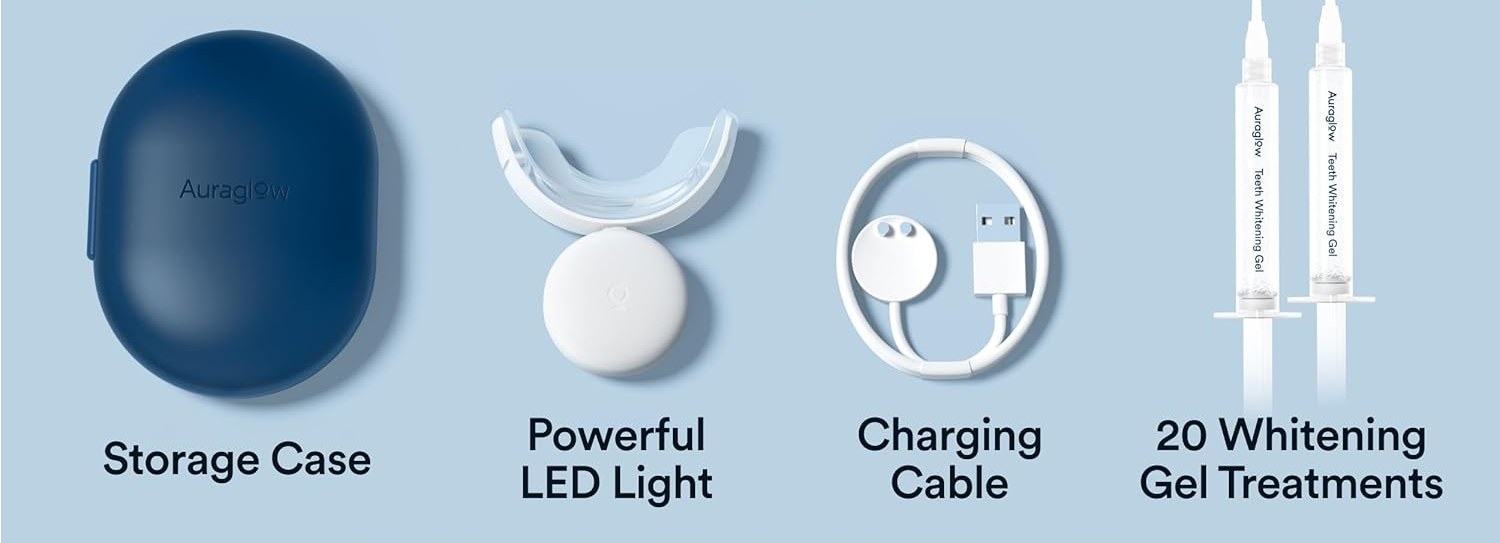
What is in the box
- 20 whitening gel treatments in two pre-filled syringes.
- A powerful LED light. This is the part that accelerates the gel, and the reason a session is thirty minutes rather than a month of mornings.
- Charging cable. The light recharges over USB, so there are no batteries to buy. A USB wall plug is not included and any phone plug will do.
- Storage case, so the tray and light are not loose in a bathroom drawer.
- Thirty minutes per session. The manufacturer states LED-accelerated results in 30 minutes and a brighter smile after the first use. Results vary.
The three objections worth answering.
-
It reaches what scrubbing cannot
Most people assume whitening is whitening and the format is preference.
The stain that bothers people is inside the tooth. A gel diffuses through the enamel and acts on it directly. Abrasion never gets there, which is the whole reason powder plateaus.
-
Controlled is not the same as harmless, and that is the point
Dentists warn that peroxide can cause sensitivity, and they are right that it can.
A gel has a concentration, a tray and a timer, so it can be spaced out or stepped down. Abrasion has no dose at all. It is however hard you brushed, on a surface with no way back.
-
The result is the tooth, not a polish on the tooth
Half the whitening products on the market are theatre in a nice jar.
Which is why the mechanism is the only part worth reading. Change the pigment and the result stays. Polish around it and your next coffee undoes the work.
See the Aura Glow whitening kit
Check AvailabilityManufacturer's 60 day money-back guaranteeNinety seconds, before you buy anything
Look the brand up somewhere it does not control. Not the reviews on its own site, those are chosen.
Several of the most heavily advertised powders sit below two stars out of five on independent platforms, across hundreds of reviews, and the complaints repeat: refunds refused because the order fell inside a promotional period the guarantee excluded, charges for extras nobody remembers choosing, support that stops replying.
A wall of five-star reviews and a low overall score is not a contradiction. These platforms weight recent reviews and discount the ones they flag as solicited. When the rating and the reviews disagree that sharply, the rating is usually the honest half.
We ran the same check on what we recommend. Aura Glow holds 3.7 out of 5 across 153 reviews, and the company replies to every negative review and settles them through its guarantee rather than arguing about promotional periods.
Its complaints are real too. Two recur: sensitivity during a treatment, and occasionally a light that stops holding its charge. Sensitivity is the known trade with peroxide, which is why we say to space sessions out rather than push through them.
Check us the same way. We would genuinely rather you did.
Who this is not for
- Anyone whose front teeth are crowns or veneers. No whitening product changes ceramic or composite.
- Anyone with untreated decay, gum disease or a cracked tooth. See a dentist first, not a whitening kit.
- Anyone who will not sit still for thirty minutes. That is the entire treatment, but you do have to actually do it.
- Under 18, pregnant or nursing, unless a dentist tells you otherwise.
Everyone else: you should not have to sand your teeth to like your smile.

What people report
-
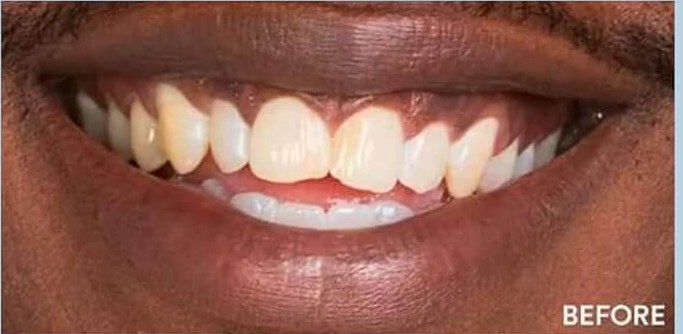
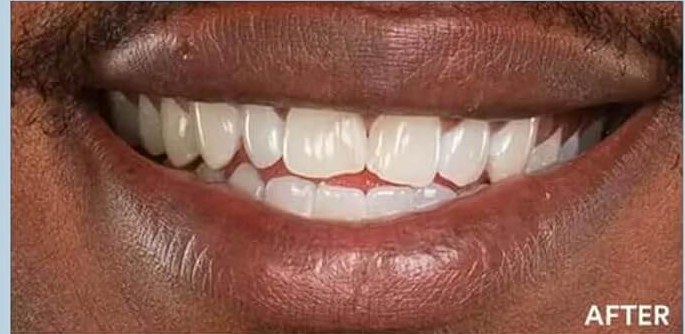
Wish I had known sooner

Nobody tells you the powder is basically sandpaper. A week with the tray did more than a year of scrubbing ever did.
Danielle Verified Buyer
-
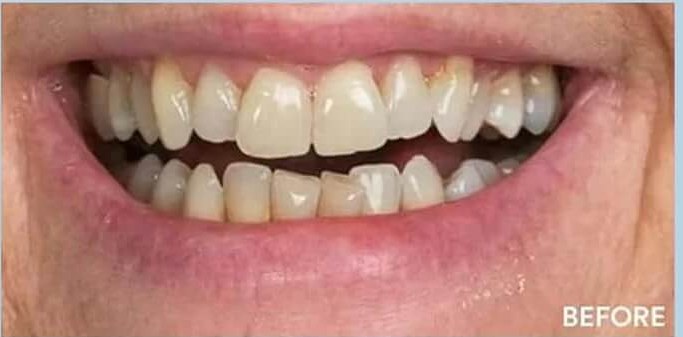
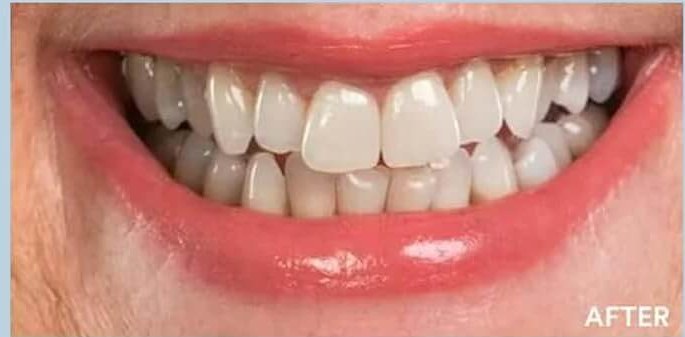
It actually stayed
The powder result was gone by the weekend every time. This has held for over a month so far.
PriyaVerified Buyer
Quick questions
-
Is peroxide not the thing dentists warn about?
Peroxide can cause temporary sensitivity, and that is worth knowing. The distinction we draw on this page is between a controlled dose acting on pigment and an uncontrolled abrasion acting on enamel. One of those you can adjust or stop. The other does not come back.
-
How fast?
The manufacturer states LED-accelerated results in 30 minutes and a brighter smile after the first use, with the full course over the twenty treatments in the box. Deeper staining takes longer. Results vary.
-
I have used powder for years. What now?
Enamel loss does not reverse, but it stops when you stop. A dentist can tell you where you actually stand, which is worth asking at your next visit.
-
What if it does not work for me?
The manufacturer offers a 60 day money-back guarantee and states that it covers return shipping. Returns are handled by the merchant, not by us.