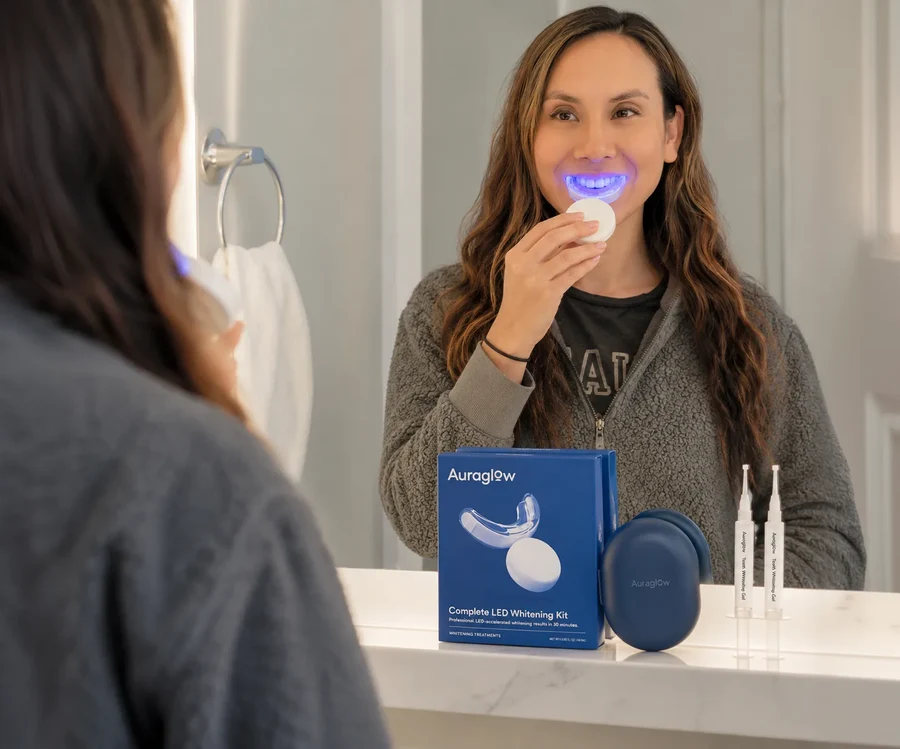
We spend most of our reports explaining what not to buy. People kept writing in to ask about one kit in particular, so this report answers the questions they actually sent.
The short version: it uses the chemistry dental offices use, it holds that chemistry against the tooth instead of letting saliva wash it away, and a light accelerates it so the job fits into one sitting rather than six weeks of mornings.
What it is, in one paragraph
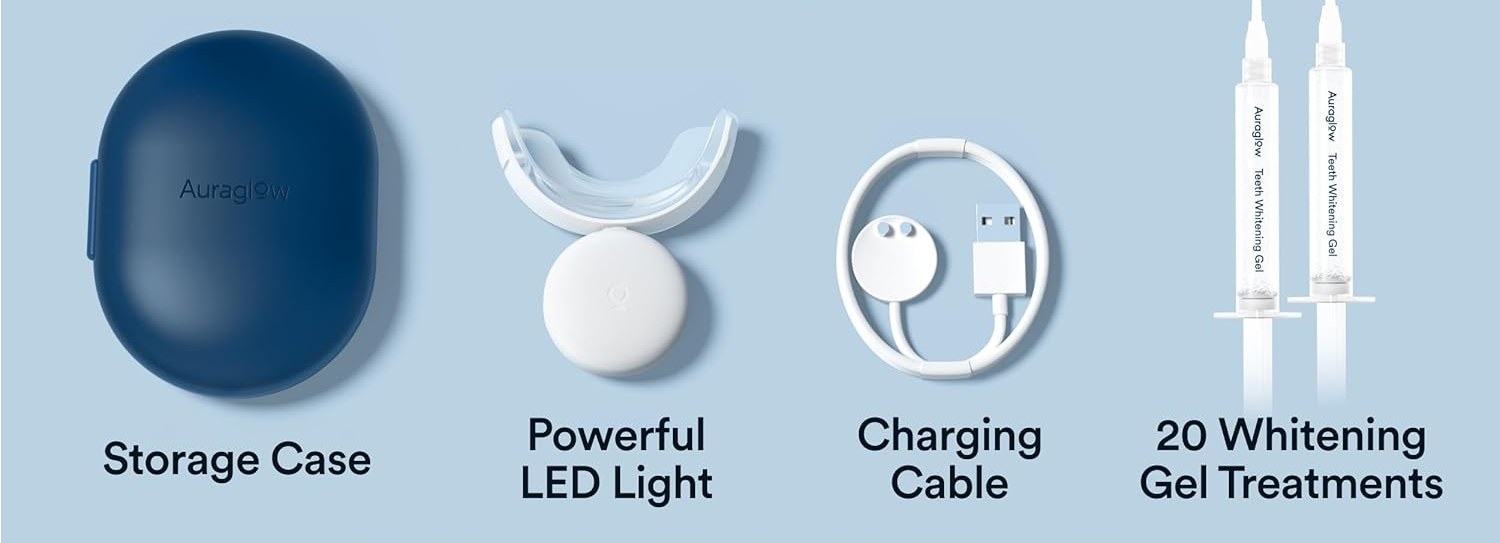
A peroxide whitening gel, a one-size tray that needs no moulding, and a rechargeable LED light. Twenty treatments in the box, thirty minutes per session, and a 60 day money-back guarantee the manufacturer states covers return shipping.
Already know what you need? Check today's price.
See The Auraglow Kit60 day money-back guaranteeDoes Auraglow actually work?
Short answer: yes, and the reason is the mechanism.
Whitening only happens one way. A peroxide gel has to sit against the tooth long enough to break down the pigment inside the enamel. Everything that fails in this category fails on that one point: powders are scrubbed off in two minutes, pens are washed away by saliva, strips slide and leave gaps.
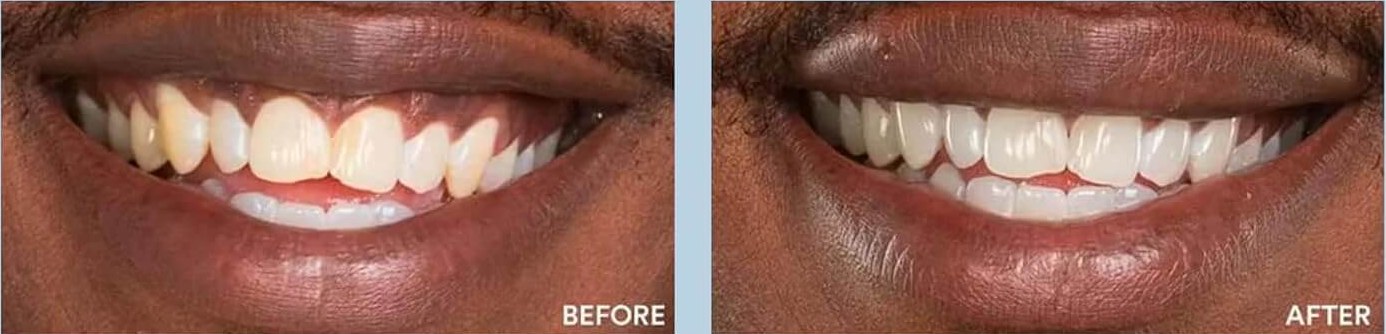
Auraglow holds the gel in a tray for a full thirty minutes and puts an LED over it. The manufacturer states results in 30 minutes and a visibly brighter smile after the first use. The before-and-after photographs above are theirs, from clinical study participants.
Do dentists actually use this method?
Short answer: yes. This is the in-office method, scaled down.

In-office whitening is a peroxide gel, held against the teeth for a measured number of minutes, with a lamp accelerating it. That is the whole procedure. It has never involved scrubbing, and no dentist has ever brushed an abrasive on your teeth to lighten them.
The at-home version uses a lower concentration over more sessions. Same active, same held-in-place delivery, same acceleration, spread across twenty treatments instead of one appointment.
Is Auraglow dentist approved?
Short answer: "approved" is the wrong question. Here is the right one.
No at-home whitening kit we are aware of carries the ADA Seal of Acceptance, and any brand claiming blanket "dentist approval" should be asked which dentist and for what. It is a phrase that sounds like a certification and usually is not one.
The question worth asking instead is whether the active ingredient and the delivery are the ones the profession uses. On that, the answer is unambiguous. Peroxide in a tray, accelerated by light, is what whitening is. Compare that with an abrasive powder, a category in which no product holds the Seal either, and which has no bleaching mechanism at all.
Is it safer than whitening powder?
Short answer: the risks are different, and only one of them is permanent.
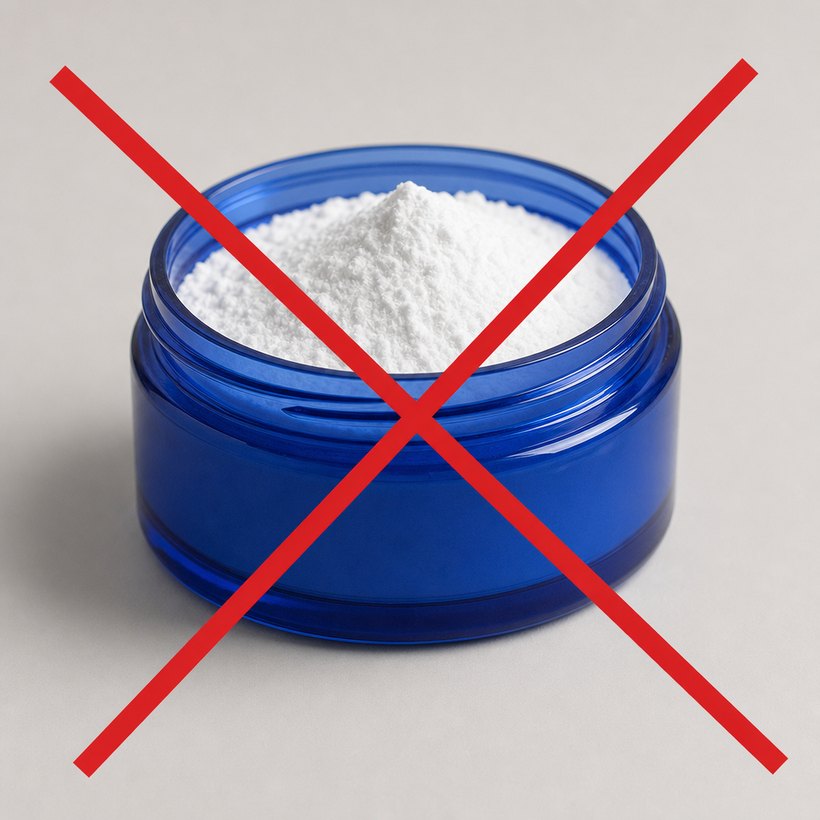
Whitening powder works by abrasion. It takes a little material off the outside of the tooth every time you use it, and enamel has no living cells, so none of that is replaced. Under the enamel sits dentin, which is naturally yellow, so thinning it can leave teeth looking worse over time rather than better.
Peroxide can cause temporary sensitivity in some people. That is the honest trade, and it is the most common complaint about every gel kit including this one. The difference is that sensitivity is adjustable and it passes. You can space sessions further apart or stop. Enamel you have already scrubbed away is simply gone.
Are the Auraglow lights any good?
Short answer: the light is the reason a session is thirty minutes.
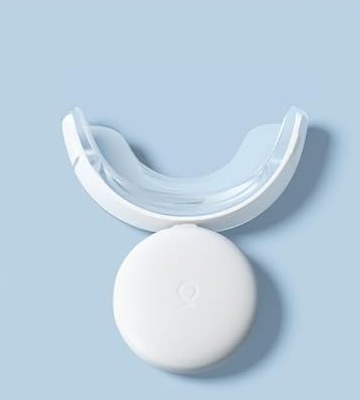
The LED is an accelerator. It does not whiten on its own, and any brand selling a light without gel is selling you a night light. Paired with the gel, it speeds the reaction so a single sitting does what would otherwise take repeated applications.
It recharges over USB, so there are no batteries to buy, and it comes with its own cable and case. A wall plug is not included and any phone plug works. A small number of reviewers report a light that stops holding charge. The company replies to every negative review it receives and settles them through the guarantee, which is worth more than a brand that never responds at all.
How does it rate against its peers?
Short answer: medium to high, in a category where that is rare.
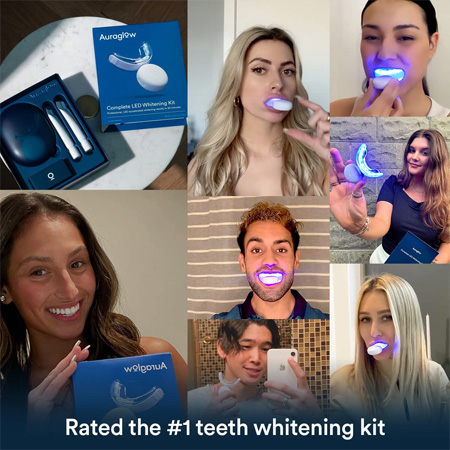
On the merchant's own listing the kit shows 4.9 out of 5 from more than 5,600 reviews. On Trustpilot, which is independent and stricter, it rates favourably against other whitening brands, and the company replies to every negative review it receives.
For context on what "favourably" means in this category, several of the most heavily advertised whitening powders sit below two stars out of five on the same platform, across hundreds of reviews, with complaints about refunds refused on promotional-period technicalities and support that stops replying.
What is the highest rated teeth whitening kit?
Short answer: it depends who is counting, so judge the mechanism instead.
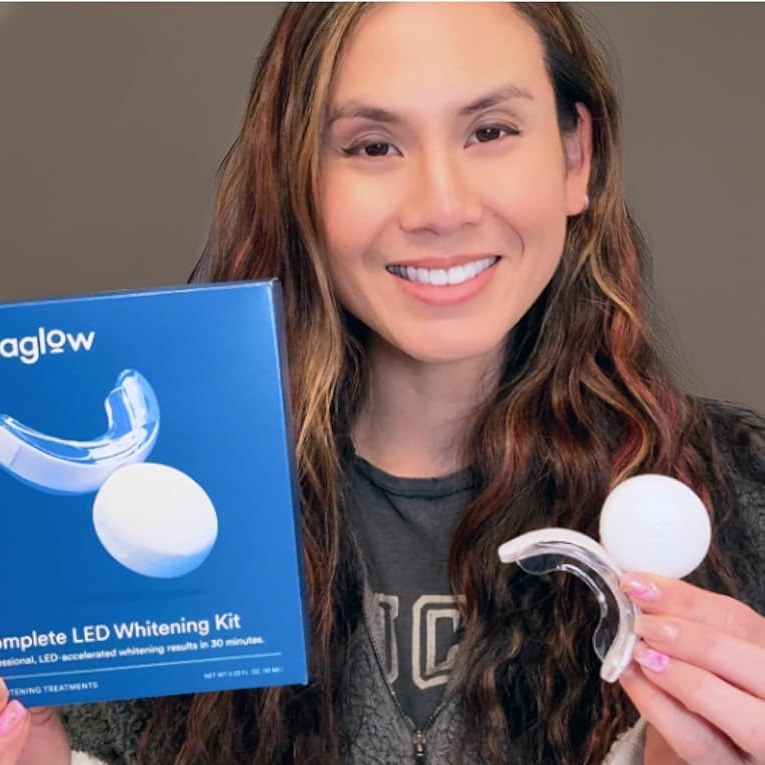
Every brand in this category can point at a rating somewhere that flatters it, which is why "highest rated" is close to meaningless on its own. Ratings are also easy to inflate and hard to verify, and the platforms that discount solicited reviews tend to produce very different numbers from the ones on a brand's own site.
What does not move is the physics. A whitening product either holds a bleaching active against the tooth for long enough to work, or it does not. Auraglow does. Powders, pens and loose gels do not, no matter how they are rated.
Institute Assessment
Recommended for anyone whose goal is a change of shade rather than a clean surface.
The mechanism is the one dental offices use, the delivery holds the active where it needs to be, and the light compresses the job into one sitting. That is the whole argument, and it is why this outperforms the abrasives filling everyone's feed.
Peroxide can cause temporary sensitivity, which is adjustable by spacing sessions out. No whitening product of any kind lightens crowns, veneers or fillings, so ask your dentist first if yours are at the front.
Other questions we were sent
-
How long do the results last?
Until new staining builds up, which depends on how much coffee, tea, wine and tobacco you put in front of your teeth. Because the pigment itself is changed rather than polished around, it does not rinse off the way a powder result does.
-
Does the tray need moulding or boiling?
No. One size, and it treats the top and bottom arch at the same time.
-
Can I use it if I have sensitive teeth?
Many people do, spacing sessions further apart. If sensitivity persists, stop and speak to your dentist. This is cosmetic, not urgent.
-
Will it whiten crowns, veneers or fillings?
No. No whitening product changes the colour of ceramic or composite. That is true of every brand and every method, including the chair.
-
Can I still use my normal toothpaste?
Yes, and you should. A whitening kit is not a substitute for a fluoride toothpaste, which is one of the quiet problems with powders that replace it.
-
What if it does not work for me?
The manufacturer offers a 60 day money-back guarantee and states that return shipping is covered. Returns are handled by the merchant, not by the Institute.
Sources
- Manufacturer product information published by Auraglow for the Complete LED Whitening Kit, including kit contents, session length, ratings and guarantee terms.
- Independent review platform listings for Auraglow and for competing whitening powder brands, reviewed at the date shown above.
- American Dental Association guidance on dentifrice abrasivity (RDA ceiling of 250) and the ADA Seal of Acceptance programme.
- US Food and Drug Administration recommended abrasivity limit of 200 RDA.
- Zoller et al., "Relative dentin and enamel abrasivity of charcoal toothpastes", International Journal of Dental Hygiene, 2023. Abrasivity figures cited here were measured on charcoal formulations.
Auraglow is sold direct by the manufacturer. We receive a commission on sales through our link.