
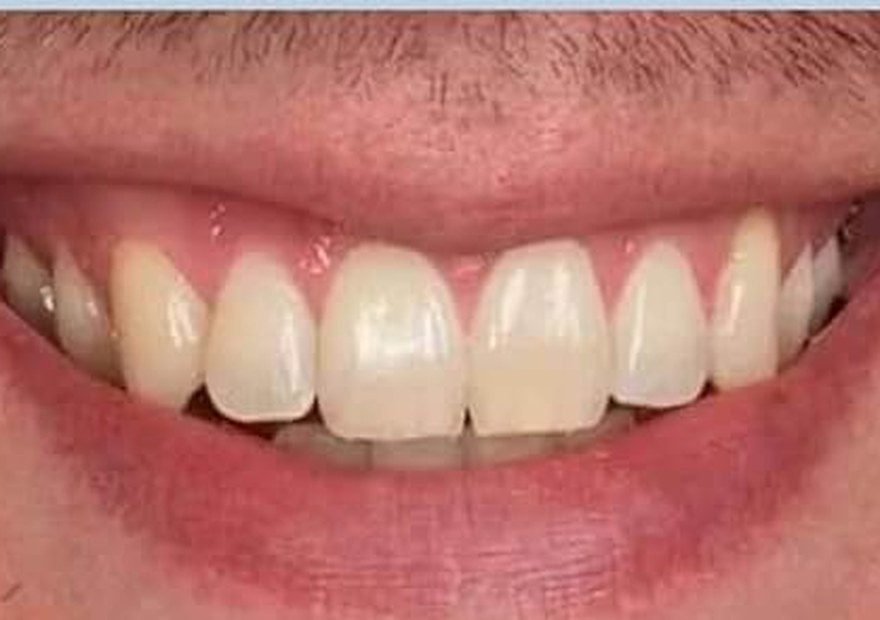
Every whitening powder works the same way, and it is not the way the ads suggest. Tiny abrasive grains, scrubbed against your teeth, lifting the film off the surface a little at a time.
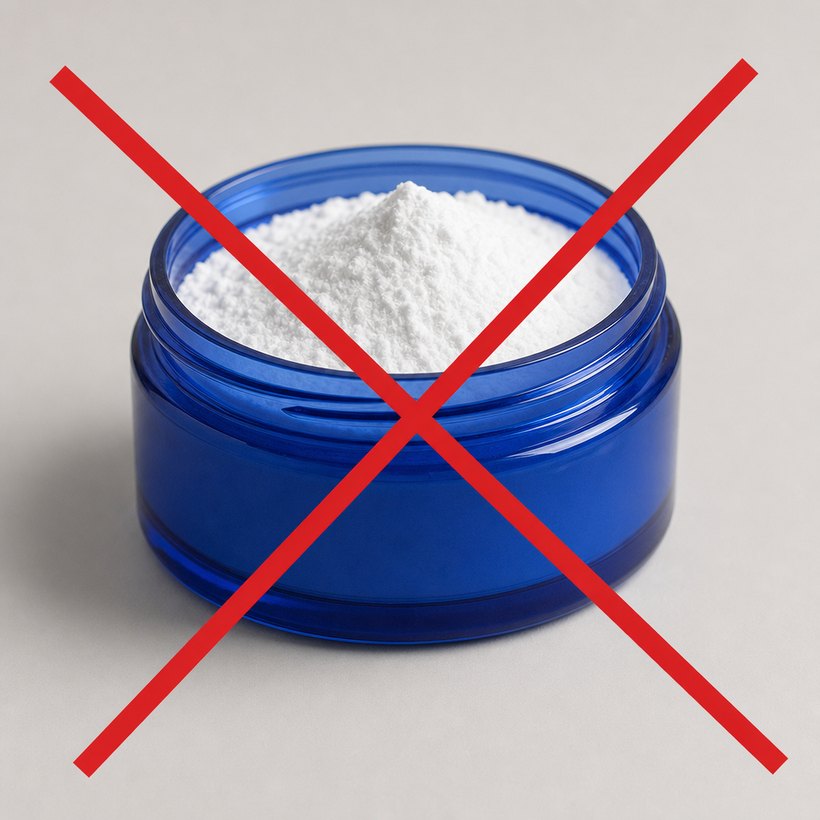
It is also why nothing much happens for weeks. There is no reaction to wait for, so the jar asks for twice a day, every day, while a fraction of the surface comes away each time.
The stain comes back. The enamel does not.
-
It has no bleaching mechanism at all
Bleaching is a chemical reaction that breaks down pigment inside the tooth. Abrasion is a mechanical action that removes material from the outside. Powder only does the second one, which is why it cannot touch the deeper discolouration people actually want gone.
-
It scores high on the one scale that measures damage
A powder carries its active on an abrasive particle, and most brands never publish an abrasivity figure. Where testing has been done, on charcoal formulations, Relative Dentin Abrasivity runs 200 to 250 against an ADA ceiling of 250 and an FDA recommended limit of 200. Whitening toothpaste sits around 150 to 200.
-
Enamel has no living cells, so it never grows back
Bone repairs. Skin repairs. Enamel does neither. There is no biological process that replaces what abrasion removes, at any age, under any diet, with any product.
-
The damage is cumulative and silent
No single brushing does anything you would notice. The problem is that nothing reverses between brushings either, so the total only moves one way across months and years of daily use.
-
Over time it can leave your teeth looking yellower
Under the enamel is dentin, and dentin is naturally yellow. Enamel is what hides it. Thin the enamel and you reveal more of the yellow layer underneath, which is the opposite of the result being advertised.
-
The result reverses within days
Because the mechanism is surface buffing, normal coffee, tea and wine put the film straight back. The brightness is a rolling rental you pay for with more scrubbing.
Already convinced? This is what we point people at.
See The Aura Glow LED KitThirty minutes a session. 60 day money-back guarantee.-
Two minutes of contact cannot do what thirty can
Whitening is concentration multiplied by time on the tooth. Brushing gives the active two minutes, diluted by saliva and then rinsed away. A tray gives it thirty, undiluted and held in place. That gap is per session, so doing it for longer does not close it.
-
Many powders contain no fluoride
If a powder replaces your toothpaste rather than sitting alongside it, you have quietly traded your main cavity protection for a cosmetic effect that washes off.
-
Abrasive particles lodge where you cannot brush them out
Dentists report finding powder granules packed into the gum margin and around the edges of fillings and crowns, where they sit as an irritant.
-
It dulls dental work, and dental work cannot be repaired by your body or by whitening
Crowns, veneers, bonding and composite fillings all take a polish that abrasion removes. They also do not respond to whitening of any kind, so scrubbing them only makes them look duller against the teeth around them.
-
Sensitivity increases as enamel thins
The thinner the enamel, the closer the outside world gets to the dentin tubules and the nerve. Cold water starting to hurt is not a coincidence that arrived at the same time as the powder.
-
There is no dose, no timer and no stop
A tray holds a measured amount of gel for a set number of minutes. A powder gives you an open jar and a brush, so the amount of abrasion depends entirely on how hard you press and how long you go. Nothing in the product limits it.
Already convinced? This is what we point people at.
See The Aura Glow LED KitThirty minutes a session. 60 day money-back guarantee.So what actually whitens a tooth?
The whitening performed in a dental office is chemical. A peroxide gel is held against the tooth for a fixed number of minutes, and it breaks down the pigment molecules inside the enamel and dentin. Nothing is scraped away.
That chemistry is not exotic, and it is not restricted to clinics. The at-home version is a tray and a gel.
Worth saying plainly: peroxide gel is not "gentle" in the marketing sense. It is simply controlled. A measured dose, in a tray, for a set time, acting on pigment rather than on the tooth surface. That is a different trade to abrasion, not an absence of one.
The kit we point readers at
Aura Glow is the same chemistry with an LED light over it. The light is the difference between a treatment you sit through once and a routine you keep up for a month.
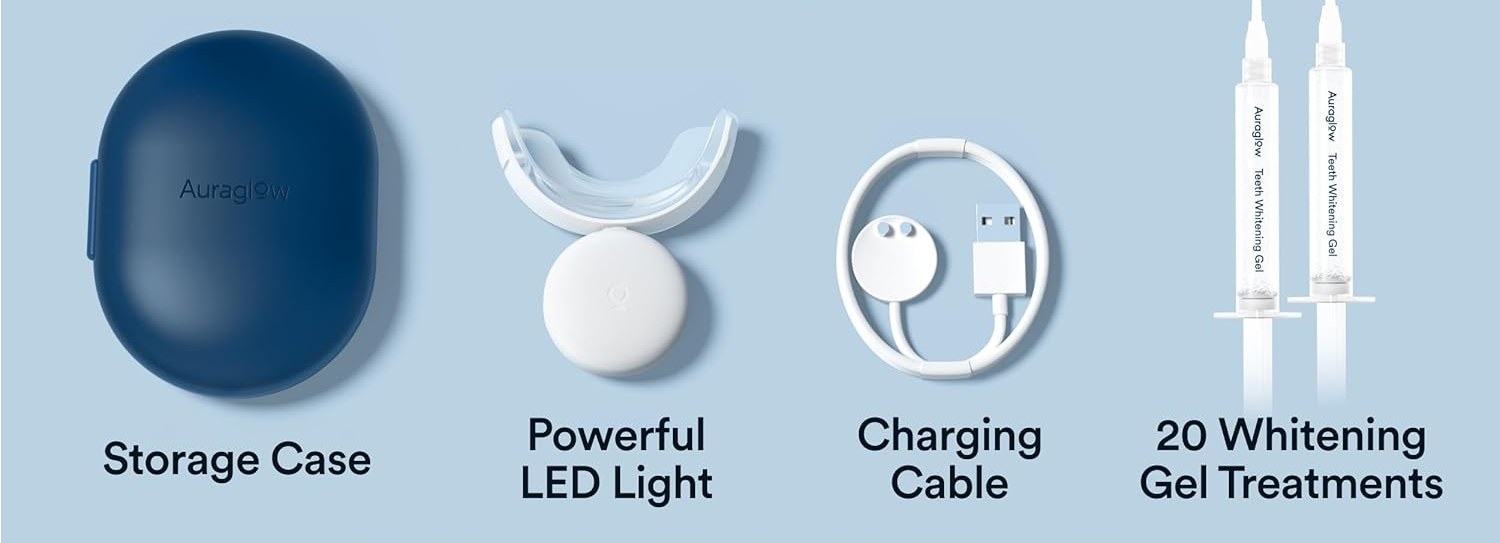
What is in the box
- 20 whitening gel treatments in two pre-filled syringes.
- A powerful LED light. This is the part that accelerates the gel, and the reason a session is thirty minutes rather than a month of mornings.
- Charging cable. The light recharges over USB, so there are no batteries to buy. A USB wall plug is not included and any phone plug will do.
- Storage case, so the tray and light are not loose in a bathroom drawer.
- Thirty minutes per session. The manufacturer states LED-accelerated results in 30 minutes and a brighter smile after the first use. Results vary.
Why a gel beats a powder
Three objections come up every time, and all three are fair.
-
It reaches what scrubbing cannot
People assume whitening is whitening, and the format is just preference.
It is not. The discolouration that bothers most people is inside the tooth, not on it. A gel diffuses through the enamel and acts on that pigment directly. No amount of abrasion reaches it, which is why powder plateaus after the surface film is gone.
-
The dose is controlled, so the damage is not open-ended
Dentists warn that peroxide can cause sensitivity, and they are right that it can.
The difference is that a gel has a concentration, a tray and a timer. You can stop, space treatments out, or step down. Abrasion has none of those controls: it is however hard you happened to brush, on a surface that cannot be replaced.
-
The result is the tooth, not a film on the tooth
Half the whitening products on the market are theatre in a nice jar.
Which is why the mechanism is the only part worth reading. Because a gel changes the pigment rather than polishing the surface, the result does not rinse off with your next coffee. That is also why it takes days rather than minutes.
Powder wants six weeks of your mornings. The light wants half an hour, once.
See the Aura Glow whitening kit
Check AvailabilityManufacturer's 60 day money-back guarantee
What people report
-
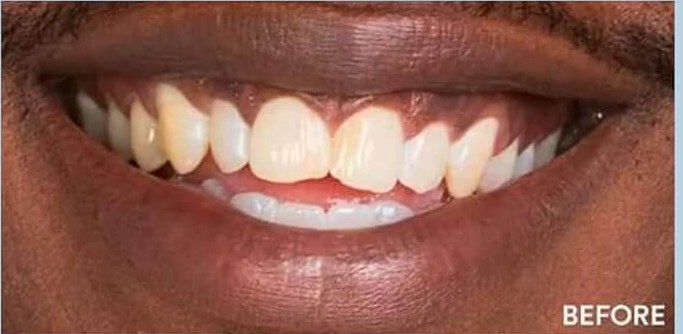
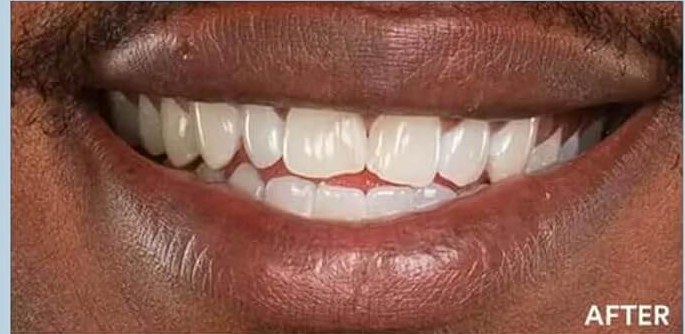
Gave up on powders

I used a whitening powder for nearly a year and my teeth were never actually whiter, just polished. One week with the tray did more than that whole year.
Danielle Verified Buyer
-
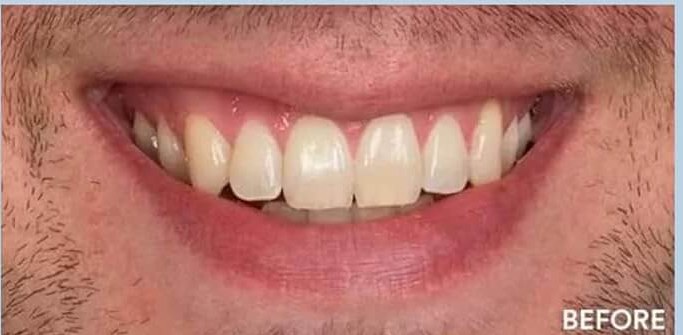
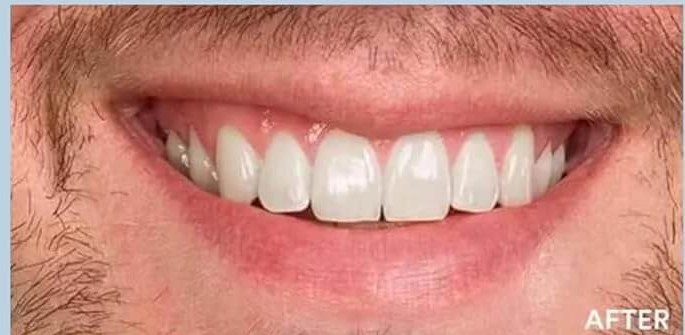
The timer is the best part
Thirty minutes, the light beeps, you take it out. I never knew when to stop with the powder and I think that was the whole problem.
MarcusVerified Buyer
Quick questions
-
Does it hurt?
The manufacturer states the gel is formulated not to cause sensitivity. Peroxide can cause temporary sensitivity in some people regardless of brand. If it does, spacing treatments further apart is the usual answer. Results and experience vary.
-
How long until I see anything?
The manufacturer states LED-accelerated results in 30 minutes and a brighter smile after the first use, with the full course over the twenty treatments in the box. Deeper staining takes longer. Results vary.
-
Will it whiten crowns or veneers?
No. Whitening of any kind acts on natural tooth structure, not on ceramic or composite. This is true of every whitening product, powders included.
-
I already used powder for a year. Is the damage done?
Enamel loss does not reverse, but it also does not continue once you stop. A dentist can tell you where you actually stand, and that is worth asking at your next visit.